
 English
 русский
 Español
The RT-610 High-Capacity Battery Jump Starter with Air Compressor uses a 40C polymer battery and offers three capacity options: 1,500mAh, 2,000mAh,2,500mAh and 3,000mAh, It boasts a starting current o...
See DetailsIndustry News 2026/10/01
How to Inflate Tires the Right Way: A Practical Guide for Daily Drivers
Content
- 1 Why Correct Tire Pressure Affects Safety, Fuel Economy, and Tire Life
- 2 How Often Should You Check Tire Pressure
- 3 Where to Find the Recommended Tire Pressure for Your Vehicle
- 4 How to Inflate Tires: Step-by-Step Procedure
- 5 Using a Portable Tire Inflator: A Better Way to Maintain Pressure
- 6 Understanding Cold vs. Warm Tire Pressure Readings
- 7 Don't Forget the Spare Tire
- 8 Air or Nitrogen: Does It Change the Way You Inflate?
- 9 Common Tire Inflation Mistakes and How to Avoid Them
- 10 When a Heavy-Duty 12V Inflator Makes More Sense
- 11 Emergency Tire Inflation and the Value of a Complete Rescue Kit
How to inflate tires correctly is a routine skill that every driver eventually faces, yet it is also a task many people postpone until a warning light appears on the dashboard. By that point, the tire has already been running below its recommended pressure for miles, flexing more than it was designed to and building up heat in the sidewall. The fix itself takes less than two minutes, but doing it properly depends on a small set of details that are easy to overlook: the pressure rating printed on the door sticker, the difference between cold and warm tire readings, and the choice between filling up at a gas station air line or using a portable inflator.
This guide explains the entire process from start to finish. You will learn where to find the official pressure recommendation for your vehicle, how to use a gas station compressor, how to get consistent results from a portable tire inflator, and why the same tire can show different numbers at different times of the day. The goal is to give you a dependable method whether the car has been parked overnight or you are standing beside it after a long highway drive.
Why Correct Tire Pressure Affects Safety, Fuel Economy, and Tire Life
An underinflated tire flexes more in the sidewall as it rolls. Every rotation bends the structure further than the engineers intended, and repeated flexing creates heat. Heat accelerates tread wear, raises the risk of a blowout, and makes the steering feel vague. Underinflated tires also increase rolling resistance, which forces the engine to work harder and increases fuel consumption.
Underinflation and Heat Build-Up
When pressure falls below the recommended level, the contact patch becomes wider and the tire runs on its shoulders instead of across the full tread. The sidewall carries more load than it was designed for, so it keeps flexing as the wheel turns. That constant bending produces internal friction. On a long highway trip, the heat can build to a point where the tire structure weakens. Drivers sometimes notice this only after a sudden failure, especially in hot weather or when the car is heavily loaded.
Overinflation and Reduced Grip
An overinflated tire has the opposite problem. The center of the tread carries most of the load while the outer edges barely touch the road. This reduces the total contact area, which means less grip under braking and cornering. The ride also becomes harsher, and impacts from potholes or sharp edges are transferred more directly to the wheel. Over time, the center of the tread wears out faster, leaving a bald strip that has little traction on wet pavement.
Why Front and Rear Pressures Are Often Different
Many vehicles specify different pressure values for the front and rear tires. The front axle carries the engine and most of the braking weight, while the rear axle may need a lower value for ride comfort or a higher value when the car is loaded with passengers and luggage. Ignoring this difference is one of the most common reasons tires wear unevenly. A car can pull to one side when the left and right tires on the same axle are not matched, even if the difference is only a few psi.
The practical lesson is simple: use the numbers from your vehicle, not a universal pressure like the one printed on the tire sidewall. The sidewall value is the maximum safe pressure, not the pressure your car should be running at.
How Often Should You Check Tire Pressure
Make it a monthly habit. Tires lose air naturally through the rubber and around the valve stem, and the loss is usually slow enough that you will not notice it from one week to the next. At the end of a month, a healthy tire can be down by 1 to 2 psi without any visible problem. Over a few months, that gradual loss becomes real underinflation.
Temperature makes the schedule more important. For every change of roughly 10°F in outside temperature, tire pressure changes by about 1 psi. When autumn turns to winter, a set of tires that was perfectly inflated in September can read 5 psi lower in February, which is enough to trigger a warning light and affect handling. The reverse happens in spring and summer, when a tire that was filled on a cold morning can become overinflated on a hot afternoon.
Check before a long trip as well, and check more often if the vehicle carries heavy loads. A loaded car pushes the tires into a different operating range, and the door sticker usually includes an adjusted value for that situation. If you have been hearing the TPMS sensor occasionally, do not wait for the light to come on solid. The sensor only reports once the pressure has already dropped below the threshold. Regular manual checks catch the problem earlier and are far more reliable.
Where to Find the Recommended Tire Pressure for Your Vehicle
The first place to look is the driver-side door area. Open the door and inspect the edge of the door frame, the B-pillar, or the glove box lid. Most manufacturers place a sticker there with the front and rear pressure values, sometimes listed in psi, kPa, or bar. On some vehicles, the sticker is on the inside of the fuel filler door.
If the sticker is missing or unreadable, check the owner’s manual. It will list the pressures for different tire sizes and load conditions. Use the value for the actual tire size fitted to your car, and use the loaded value when you are traveling with passengers or cargo.
Do not rely on the number molded into the tire sidewall. That number is the maximum pressure the tire can safely hold, not what the vehicle manufacturer recommends. A tire marked with a maximum of 51 psi may need to run at 33 psi on your car. Filling it to the sidewall number would make the ride unsafe and greatly reduce grip.
| Vehicle type | Typical cold pressure range |
|---|---|
| Small hatchback or subcompact | 30–34 psi |
| Midsize sedan | 32–36 psi |
| SUV or crossover | 33–38 psi |
| Light-duty pickup truck | 35–40 psi |
These ranges are only a starting point. The sticker in your own vehicle should always be treated as the final authority because it was created by the engineers who developed the car.
How to Inflate Tires: Step-by-Step Procedure
Before you begin, check whether the vehicle has been sitting long enough for the tires to be cold. A cold tire means the car has been parked for at least three hours or driven less than about one mile. If the vehicle has been on the road for more than fifteen minutes, the tires are warm and the readings will be higher. You can still fill them, but you need to account for that difference, which is explained in the cold and warm section later.
- Locate the valve stem on the first tire. It is usually at the edge of the wheel, with a small black or silver cap screwing onto it.
- Remove the valve cap and put it somewhere safe, such as a pocket, so it does not roll under the car.
- Press a tire pressure gauge firmly against the valve stem. If you hear hissing, the gauge is not seated properly. Adjust it until the air stops escaping, then read the number shown on the gauge.
- Compare that reading with the recommended pressure for that axle. If the reading is too low, attach the air hose from the gas station pump or portable inflator to the valve stem.
- Add air in short bursts, especially when using a gas station compressor without a preset function. After each burst, pull the hose away and recheck the pressure with your gauge.
- If you overshoot the target, bleed air gently by pressing a small pin or the back of a digital gauge against the center pin inside the valve stem. Release in half-second increments rather than a long continuous press.
- Fill all four tires to their correct front and rear values. Remember that front and rear may not be the same.
- Screw the valve caps back on and start the engine. The TPMS warning light should turn off once every tire is above its threshold.
Gas station air lines can vary in quality. The built-in gauge on an air pump is often dirty, damaged, or left unmaintained for long periods. If it shows a surprising number, double-check with a portable gauge before releasing air from the tire. Releasing air based on a broken station gauge is a common way to end up with a tire that is far too low.
Using a Portable Tire Inflator: A Better Way to Maintain Pressure
A portable tire inflator is not just a backup tool. For many drivers, it becomes the primary tool because it is available at home, in the garage, or at the side of the road. Instead of searching for a gas station with a working pump, you can check and adjust pressure in less than two minutes without leaving your driveway.
Most portable inflators use a small electric compressor. Some plug into the 12V socket in your car, while others contain a rechargeable battery. The advantage of a battery-powered model is that you can use it without keeping the engine running, which is useful in an emergency. A digital pressure display and an automatic shut-off feature are the two main conveniences to look for. With auto shut-off, you set the target pressure, start the inflator, and it stops by itself when that value is reached.
Using a portable unit is almost identical to using a gas station pump: remove the valve cap, connect the hose, set the target, and switch on the compressor. The main difference is that the portable unit usually has better control, so it is easier to avoid overinflation.
 RT-601 Mini Portable Tire Inflator with 150 PSI and USB-C ChargingThis compact cordless inflator offers a 150 PSI maximum rating and Type-C input for easy recharging. Its built-in battery, LED light, and SOS mode make it a flexible trunk companion for topping up tires without a nearby power outlet.View Product →
When choosing a portable inflator, check the maximum pressure rating. A model rated to at least 150 psi gives you enough headroom for larger tires, and it can handle a temporary repair kit that requires higher pressure. The power source also matters. A 12V model draws current from the car battery, so it is best to run the engine while using it. A rechargeable model with a USB-C input is more flexible because it charges like a phone and can be kept in the trunk without needing a power point nearby.
If you want to understand the technical details before choosing a unit, it helps to look at how a portable tire inflator works and what features matter. This is especially useful when comparing airflow, pressure accuracy, and build quality. Understanding the mechanism also makes it easier to maintain the tool so it is ready when you need it.
Understanding Cold vs. Warm Tire Pressure Readings
Cold tire pressure is the standard reference because it is consistent. When a tire is cold, the air inside is at normal ambient temperature, and the reading can be compared directly with the number on the door sticker. That number assumes the tire has not been driven recently.
Once you drive, the tire flexes and heats up. Air inside it expands, and the pressure rises even though no air is added. A tire that reads 33 psi cold can easily read 36 psi after half an hour of driving. Some drivers see this and release air, thinking the tire is overinflated. That is a mistake. Releasing warm air leaves the tire underinflated once it cools down.
Temperature changes work the same way externally. A tire inflated on a hot day will show a lower pressure on a cold night, not because of a leak but because the air contracted. The opposite occurs when cold weather turns warmer. For every change of about 10°F, adjust your expectation by roughly 1 psi.
| Tire condition | Typical gauge result | What to do |
|---|---|---|
| Cold, parked for 3+ hours | Matches the recommended pressure when correctly filled | Add or release air until the reading matches the sticker value |
| Warm after a short drive | Roughly 3–6 psi higher than the cold value | Do not release air unless the reading is far above the target |
| Ambient temperature drops by 10°F | Pressure drops by roughly 1 psi | Add air on a cold day to bring the reading back to the sticker value |
| Ambient temperature rises by 10°F | Pressure rises by roughly 1 psi | Check the reading; release air only if it is clearly above the target |
The safest approach is to check the tires when they are cold and set them exactly to the door sticker value. If you must check when the tires are warm, let the engine cool for a while first, or simply note the higher reading and revisit the car in the morning.
Don't Forget the Spare Tire
Spare tires sit unused for months, slowly losing pressure through the rubber and around the valve stem. When the moment arrives that you need the spare, it often turns out to be flat or seriously underinflated. Unlike the regular tires, the spare gives you no warning because it is not monitored by the TPMS system.
Check the spare at least twice a year, and always before a long trip or a remote camping route. On many vehicles, the recommended spare pressure is printed on a separate sticker in the trunk or under the load floor. Compact temporary spares often require a higher pressure than regular tires, sometimes around 60 psi. Do not assume the value is the same as the four main tires.
To inflate the spare, use the same valve and hose you would use for any other tire. If the vehicle has been sitting for a while, the spare might be low enough that it takes a while to fill. This is exactly the situation where a portable inflator is useful. It removes the need to drive to a station on a spare that may not have enough air to carry the car safely. Many drivers who realize this eventually decide to keep a portable unit in the car, and when they see that portable tire inflators are worth it for everyday drivers, the decision becomes about model choice rather than whether to buy one at all.
Air or Nitrogen: Does It Change the Way You Inflate?
Regular air is about 78% nitrogen. The remaining portion is mostly oxygen, plus small amounts of water vapor and other gases. Nitrogen fill services advertise slower pressure loss because nitrogen molecules are larger than oxygen molecules and therefore escape through the rubber at a slower rate. In real-world driving, the difference is small. A tire filled with nitrogen still loses pressure over time and still needs to be checked regularly.
For the average driver, inflating with regular air is perfectly acceptable. The most important part of tire maintenance is not the type of gas inside the tire; it is the habit of checking the pressure and correcting it before driving. If a tire shop offers nitrogen for free, there is no harm in using it. If it costs extra, regular air will meet your needs just as well, as long as you inspect the tires each month.
One practical note: it is safe to top up a nitrogen-filled tire with regular air in an emergency. This does not damage the tire or create a hazard. The gas mix will simply have a slightly higher oxygen content, and from the driver’s seat there is no noticeable difference.
Common Tire Inflation Mistakes and How to Avoid Them
Even experienced drivers make small errors that lead to uneven wear or poor handling. These are the most common mistakes to watch for.
- Trusting a gas station gauge blindly. Station gauges are exposed to weather, rough use, and water. They drift out of calibration over time. Keep a separate gauge in your car and use it as the final reference.
- Releasing air from a hot tire. A warm tire reads several psi higher than its cold value. Removing air in that condition leaves the tire underinflated once it cools, which is worse than leaving it slightly high.
- Using only the TPMS warning light. The light gives a yes or no signal and often lights up only after a serious drop. By the time it appears, the tire may have been running low for a long distance. Regular manual checks catch gradual loss earlier.
- Filling to the sidewall maximum. The number molded into the tire is the maximum safe pressure, not a recommendation. Using it makes the ride harsh and reduces traction.
- Ignoring the front-rear difference. A door sticker can call for 35 psi in the front and 32 psi in the rear. Filling all four to the same value creates the wrong handling balance.
- Leaving the valve cap off. The cap protects the valve core from dust and mud. A dirty valve core can leak slowly and corrode, eventually causing a valve failure.
If you correct these small habits, tire life improves, fuel economy stays predictable, and the risk of a roadside failure drops significantly.
When a Heavy-Duty 12V Inflator Makes More Sense
Portable inflators with built-in batteries are excellent for cars and light SUVs, but there are times when a bigger unit is justified. If you drive a pickup truck, van, off-road vehicle, or trailer outfit, the tires are larger and need more air to reach their target pressure. A small inflator will run longer and slow down as it works against the higher pressure inside a large tire.
For this situation, a direct 12V inflator with dual cylinders makes sense. Dual cylinders deliver air faster because both cylinders work together, and a metal cylinder body tends to cool better during prolonged use. A model with two cylinders can fill a truck tire from underinflated to the correct pressure in much less time than a compact single-cylinder unit, and it is less likely to overheat on a hot day.
When using any 12V inflator, start the engine first. Running the inflator from the battery while the engine is off can drain enough power to make it hard to start the car, especially in cold weather. The engine also provides a stable voltage, allowing the compressor to operate at full speed.
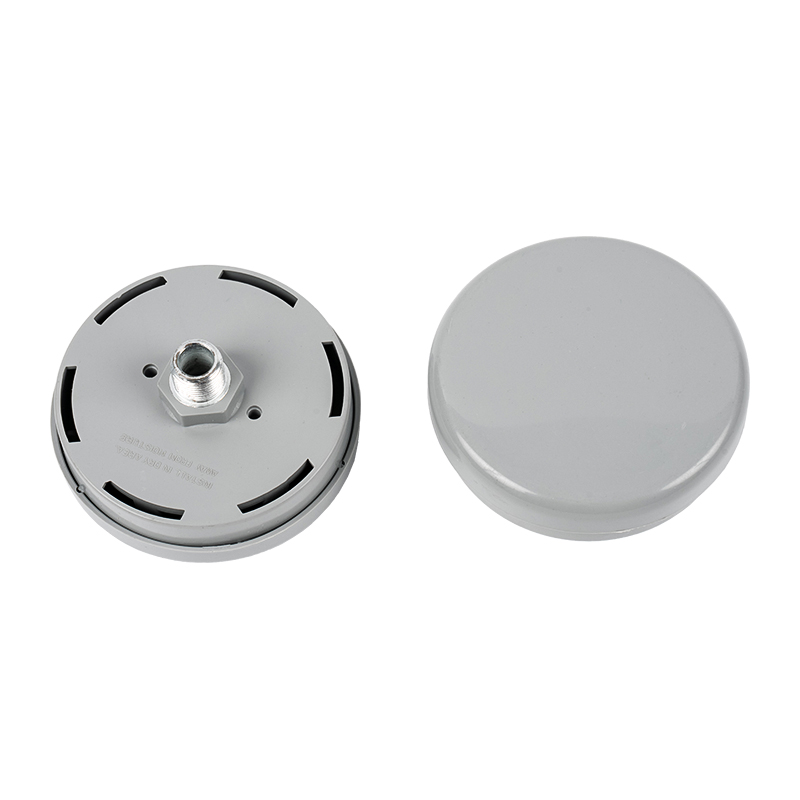 RT-531 Heavy-Duty Dual-Cylinder 12V DC Tire Inflator PumpIf you tow or carry heavy loads, this dual-cylinder 12V pump delivers high airflow to inflate large tires quickly. Its metal construction and high pressure range suit demanding roadside use, reducing the time spent on slow inflation.View Product →
If the vehicle is used for towing or heavy loads, the added airflow of a dual-cylinder unit is not a luxury. It is the difference between spending a few minutes at a station and managing a slow, noisy inflation process on the side of the road.
Emergency Tire Inflation and the Value of a Complete Rescue Kit
A tire does not always fail gradually. Sometimes you notice the steering pulling to one side, or you hear a rhythmic flapping sound that means the tire is losing air. In that situation, the first step is to pull off the road in a safe spot and inspect the pressure with a gauge. If the tire is low but not completely flat, adding air may be enough to get you to a repair shop without changing the wheel on the roadside.
This is where a combined emergency tool becomes useful. A jump starter with a built-in air compressor can handle both of the most common roadside problems: a dead battery and a low tire. If the compressor includes a tire pressure monitoring function, you can set the desired pressure, let it run, and trust the tool to stop at the right value even when you are focused on traffic and safety.
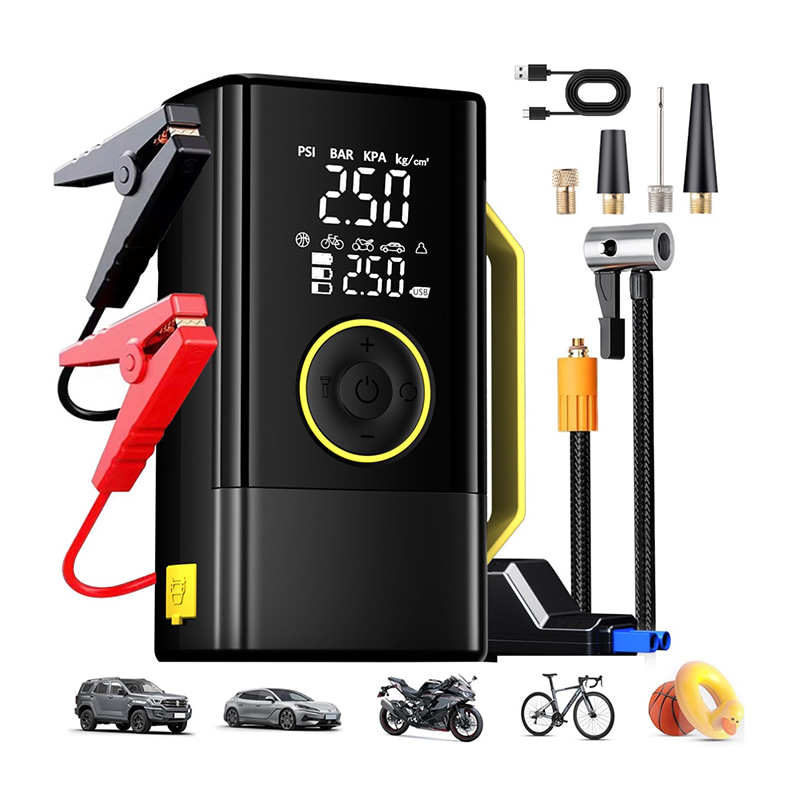
RT-526 Jump Starter with Air Compressor and Tire Pressure MonitoringThis all-in-one emergency tool combines a 600A jump starter with an air compressor that features automatic shut-off at your preset tire pressure. It also includes LED and SOS lights, helping you handle both dead batteries and low tires safely.View Product →
A good emergency strategy does not depend entirely on one device. Keep a tire repair kit, a basic tool set, and a working flashlight in the car. The inflator handles the pressure side, the jump starter handles the electrical side, and the rest is about knowing where your jack and spare tire are and how to use them. Test the spare tire pressure when you install the winter tires or before a long vacation, not during a storm beside a busy highway.
Inflating tires is a simple process once you stop reacting to warning lights and start following a routine. Check the sticker on your door frame, keep a reliable gauge in the glove box, set the pressure on cold tires, and remember that temperature changes will affect the reading throughout the year. Whether you fill up at a station or use a portable inflator, the core method stays the same: know the correct value, measure before adding air, and verify the result after you finish.
Building this habit takes no more than a few minutes each month. It reduces fuel costs, extends tire life, and gives you one fewer thing to worry about when the weather changes or the road turns rough.
Let's Talk
Keep in touch with us
Related products
-
-
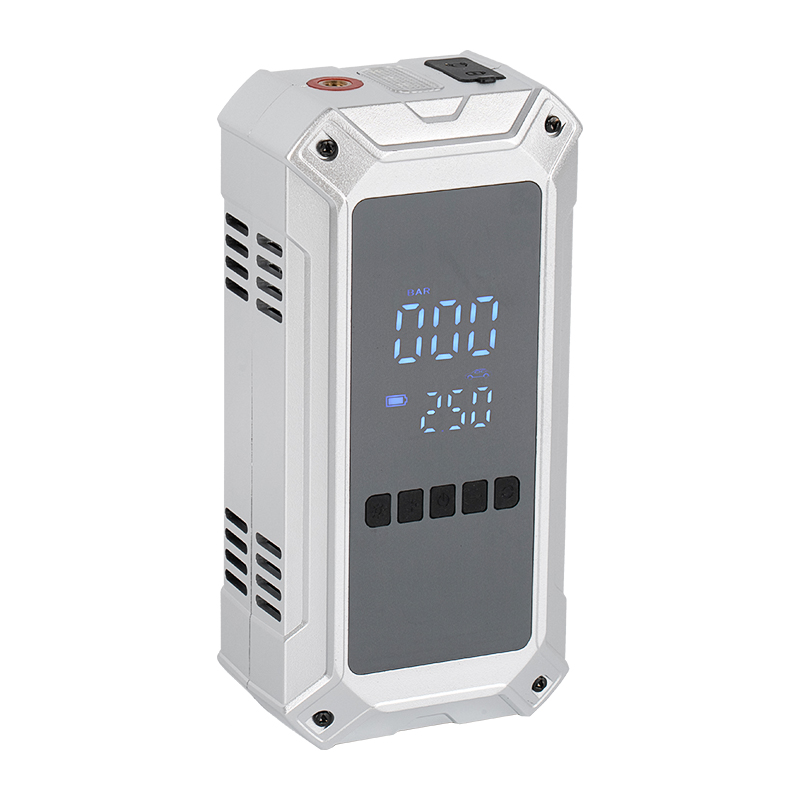
The RT-526 Jump Starter with Air Compressor with Tire Pressure Monitoring is a multi-functional smart car tool integrating emergency starting, tire inflation, tire pressure monitoring, emergency light...
See Details -
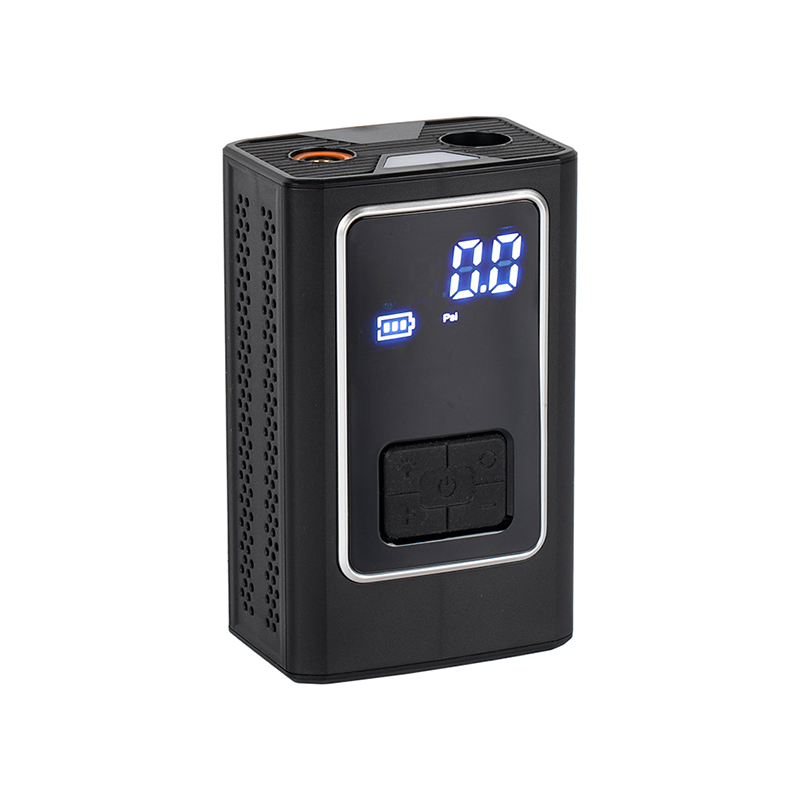
RT-606A Mini cordless USB output Portable Tire Inflator equipped with 18650 lithium-ion batteries, this unit offers selectable capacity options of 1,800mAh x 2, 2,000mAh x 2, or 2,500mAh x 2, and oper...
See Details -
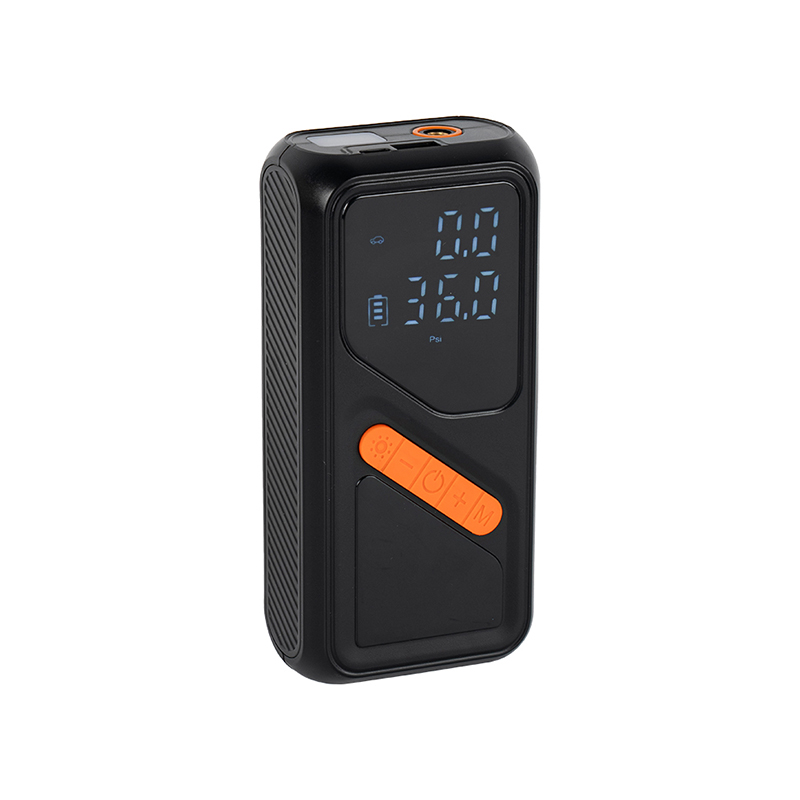
The RT-506 Cordless Portable Tire Inflator with Tire Pressure Monitoring features an 18650 lithium battery, providing long battery life and supporting rapid inflation. With an inflation rate of approx...
See Details -
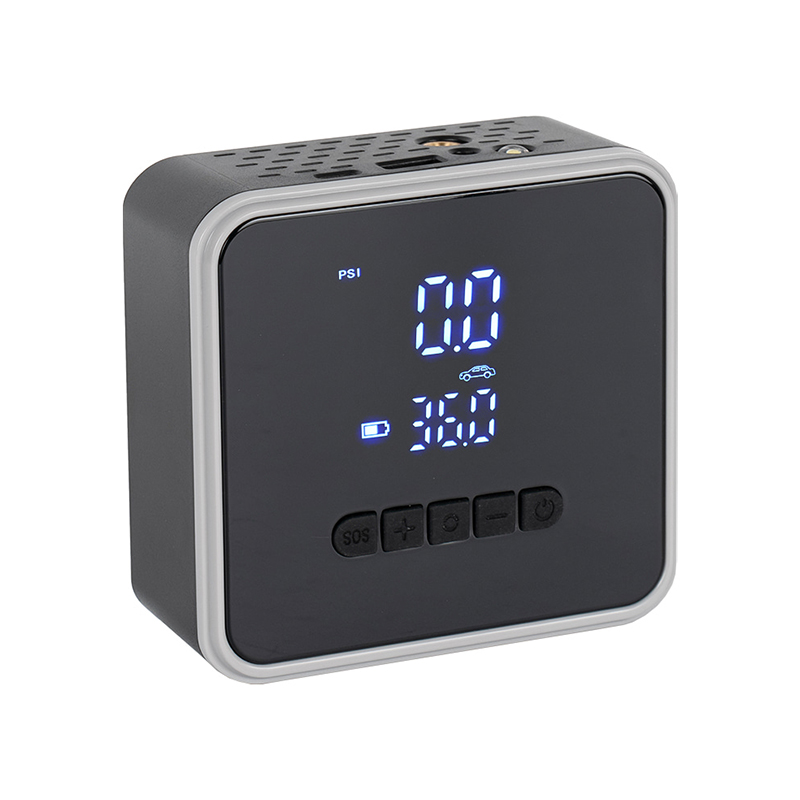
The RT-503 High-Capacity Portable Tire Inflator features five inflation modes—Car, Motorcycle, Bicycle, Ball, and Free Mode—covering a pressure range of 0.35 to 10.3 Bar (5 to 150 PSI), enabling it to...
See Details -
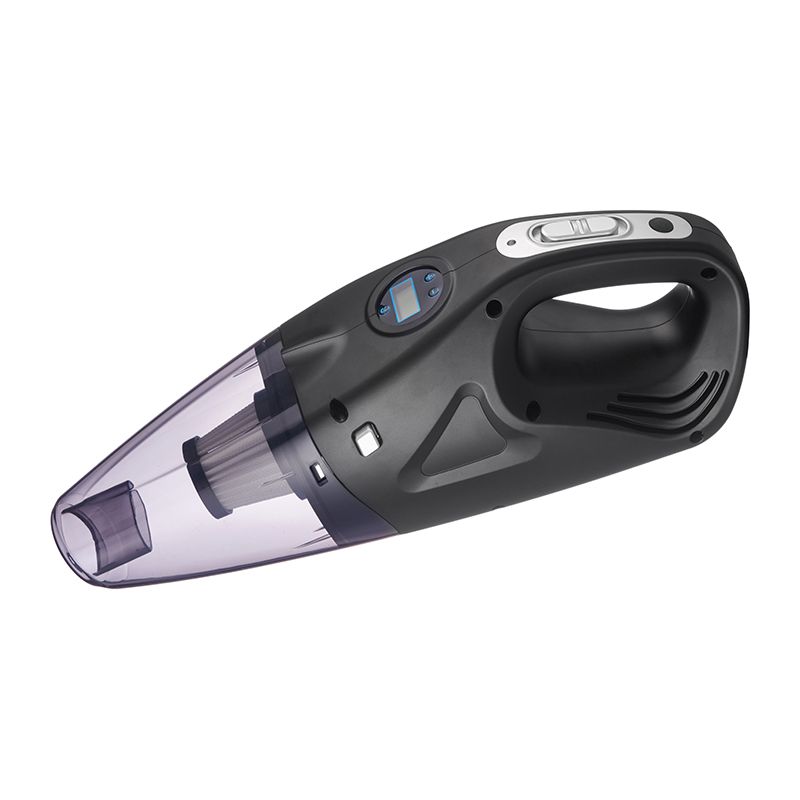
The RT-8822-S 4-in-1 Vehicle-Mounted Vacuum Cleaner—available in both cordless and corded versions—is powered by an 18650 lithium-ion battery (offering various capacity options) and operates at a 12V ...
See Details
News
-
Vacuuming a car properly is not a one-pass task. If you only move the nozzle over the visible surfaces, you are leaving...
READ MORE -
To inflate tires at a gas station correctly: check your vehicle's recommended tire pressure from the sticker inside th...
READ MORE -
You bought a compact 12V car vacuum cleaner to keep under the seat of your SUV. It handles coffee spills, crushed crack...
READ MORE -
Two handheld vacuums sit on the same workbench. One is a 7.4 V cordless unit rated at 12,600 Pa with a washable filter ...
READ MORE -
You open the back door after a short drive, and your dog jumps out leaving a layer of fur across the rear seat. You rea...
READ MORE -
It is a Wednesday morning, the temperature has dropped overnight, and your dashboard tire pressure warning light is glo...
READ MORE
Message Us Right Now!
Get Connected
 Whatsapp
 Wechat
Copyright © Ningbo Rongteng Auto Accessories Co.,Ltd. All rights reserved.
 Custom Vehicle Tire Inflators Manufacturers